Saturday, May 20, 2023

The final betrayal: Yousaf goes through the motions of holding the special conference, but cynically changes the purpose of the event into the total opposite of the one Sturgeon intended. It's now a mechanism for disempowering SNP members and burying independence for however long Yousaf remains leader.

If The National are reporting this development accurately, the new specified function of the conference is - 

"will be solely focused on how Scotland is able to hold a legally binding independence referendum"

That should be an incredibly short discussion, because the Supreme Court has ruled that Scotland is not able to hold a referendum of any sort, either legally binding or non-binding.  A referendum is entirely in the gift of the UK Government, who have definitely ruled it out.  End of story.

For the avoidance of doubt, the purpose of the special conference is now the total opposite of the one intended by Nicola Sturgeon when she announced it.  It was supposed to be an event at which SNP members thrashed out the details and timings of a vote on independence that would be neither a referendum (because such a thing is no longer possible) nor legally binding, and members were to be given the final say because Ms Sturgeon did not "have a monopoly on wisdom".  Now it's a conference in which you can choose any option you like, just so long as it buries the Sturgeon plan of using a scheduled election as a de facto referendum. That is required of members because apparently Yousaf DOES have a monopoly on wisdom.  The manner in which Yousaf is persevering with the conference is a bit like the leaders of a coup announcing that elections will go ahead as planned, but with the minor difference that there'll only be one legal party and one approved list of candidates that everyone will be required to vote for.

Let me confront Yousaf loyalists with two inconvenient points of reality.  Firstly, there are literally no options for SNP members to choose between at this conference if it has already been predetermined by the leadership that a legally-binding referendum is the only legitimate way of winning independence.  There are no variations or flavours to that method - the only way you can get a referendum is by saying "please, Mr Jack, can we have a Section 30?" and then to go on repeating that question into infinity when the answer is always no.  The conference is therefore by definition a sham and a rubber-stamp of a decision that has already been taken.

Secondly, the SNP's conditions for a process that qualifies as "gold standard" now seem to significantly exceed the ones that applied even under the Edinburgh Agreement in 2014, because the 2014 referendum was categorically NOT legally-binding.  The UK Government made a political declaration that they would accept the outcome of the vote, but that declaration had no legal force or effect.  There would have been no legal automaticity to independence in the event of a Yes majority vote.  The Yousaf leadership seem intent on putting as many barriers in the way of independence as humanly possible, including ones that are self-evidently unnecessary, and it's reasonable to infer that they are doing so because they are a de facto devolutionist leadership.  The SNP have ceased to be a party actively seeking to win independence for the first time since at least 1942, and the purpose of the special conference is now to formally endorse the shelving of independence - a grotesque perversion of the reason Nicola Sturgeon called it.

The fact that the SNP under Yousaf are to all intents and purposes opposed to winning independence in any conditions that might ever exist in the real world does not put the independence movement in an impossible position by any means, but it puts us in a bloody awkward position.  It means independence can only happen if Yousaf is either replaced as leader or forced into reversing course entirely, and the only way in which either of those events will occur is if the SNP are shocked into taking drastic action as a result of voters abandoning them.  That's not something I find myself remotely comfortable wishing for, and indeed I'm not going to wish for it.  I'm sure I'm not alone in that.  The least worst outcome from here would be if poor opinion poll results prove a sufficient shock to bring Yousaf down before the general election, but I have a horrible feeling that only actual seat losses in an actual election would bring enough pressure to bear.

* * *

I launched the Scot Goes Pop fundraiser for 2023 a couple of weeks ago, and the running total has now passed £1200.  The target figure is £8500, however, so there's still quite some distance to travel.  If you'd like to help Scot Goes Pop continue by making a donation, please click HERE.  Many thanks to everyone who has donated so far.

Friday, May 19, 2023

The SNP have no independence strategy but lots of pro-indy votes. For Alba the reverse is true. How do we square this circle?

In 2021, I made three adventurous predictions about the result of the Holyrood election, one of which was that Alba was likely to win at least a seat or two.  When I was later taunted about being a long way out with the Alba prediction, I pointed out that I never claimed to be Nostradamus, but actually the other two predictions were proved right, and in the immortal words of Meatloaf, "two out of three ain't bad". And in fairness, I think last night's Question Time was a belated insight into why I made that Alba prediction in the first place, because you could see how the audience started to warm to Alex Salmond once he was given the space to talk sense about a wide range of bread-and-butter issues.  What I hadn't anticipated in 2021 was that the BBC in particular would treat Alba in the same way that they treated Sinn Fein during the Troubles - ie. as a 'non-normal' party who could only be given airtime if every second of that airtime was devoted to delegitimising their very existence.  Last night will have repaired some of that damage, but only a small portion of it, simply because of Question Time's modest audience figures.

The programme encapsulated the problem faced by the independence movement at present, because it confirmed that there is a party with the right independence strategy and a convincing leadership, but that party is the one with 2-3% of the vote, not the party with 30-40% of the vote.  Mairi McAllan's answers on behalf of the SNP were dismal beyond belief, and confirmed yet again that the SNP under Yousaf have ceased to be a party actively seeking to win independence for the first time since at least 1942.  So how do we square this circle?  I know many of my fellow Alba members would say "simple - everyone ditch the SNP and start voting Alba" but in the real world that's not likely to happen any time soon, barring some kind of game-changing event such as a high-profile defection or series of defections.  And while there's a degree of impatience with the likes of Ash Regan for not joining Alba as of yet, those parliamentarians may well have calculated that there is still a bigger percentage chance of "recapturing the SNP" than there is of building up Alba to the point where it overtakes the SNP as the largest pro-indy party.  Given that Yousaf only won the leadership by a wafer-thin margin, it would be hard to argue that they're wrong about that, at least for the moment.  The dilemma is that you can't pursue 'change the SNP from inside' and 'leave the SNP and replace it' strategies simultaneously - you have to commit to one or the other, albeit with the option of switching from the first to the second if the first runs out of road.

But the second dilemma is just how long do you give it?  What if, despite his vulnerability and unpopularity, Humza Yousaf does a John Major and clings on by his fingertips for a good few years?  In that event, some parliamentarians may end up wishing they'd tried to change the weather by switching parties.  One possibility that is perhaps more likely than it currently seems is that SNP rebels could set up yet another new party, albeit one that becomes a close ally of Alba's, perhaps with a relationship along the lines of the SDP-Liberal Alliance of the 1980s.  That way they might feel bolder about leaving the SNP, because they wouldn't have to worry so much about any image problems or baggage that Alba has, while they could still benefit from the political talents of Alex Salmond and other leading members of Alba.  It would be a neat way of resolving the current stalemate - but first of all the SNP rebels would have to feel their current party is unsalvageable, and we may yet be some distance from that.

* * *

I launched the Scot Goes Pop fundraiser for 2023 a couple of weeks ago, and the running total has now passed £1200.  The target figure is £8500, however, so there's still quite some distance to travel.  If you'd like to help Scot Goes Pop continue by making a donation, please click HERE.  Many thanks to everyone who has donated so far.

Monday, May 15, 2023

A belated look at last week's Survation poll showing another boost in support for independence - but more grim numbers for the unpopular new SNP leader Humza Yousaf

I'm not firing on all cylinders because of my injuries, so please forgive any spells of radio silence.  However, I did promise to have a belated look at last week's Survation / True North poll (I believe it was published on Wednesday), so let's quickly do that now.  It follows the familiar recent pattern of showing good news for independence support, but bad news for the SNP under their unpopular new leader Humza Yousaf.  Nevertheless, the previous Survation poll was unusually decent for the SNP, so the drop in SNP support in the new poll perhaps needs to be seen in that context.

Should Scotland be an independent country?

Yes 48% (+1)
No 52% (-1)

Scottish voting intentions for the next UK general election:

SNP 38% (-2)
Labour 31% (-1)
Conservatives 18% (+1)
Liberal Democrats 9% (+2)
Greens 2% (+1)
Reform UK 1% (-1)
Alba 1% (-)

Seats projection (current boundaries, with changes from 2019 election): SNP 32 (-16), Labour 16 (+15), Conservatives 6  (-), Liberal Democrats 5 (+1)

The SNP are just about retaining their majority in Scottish seats at Westminster on these numbers - they would have 32 seats and unionist parties in combination would have 27.  In the real world, though, that's too fragile an advantage to bring to the table in a Westminster election, which is an 'away fixture' for the SNP and a 'home fixture' for both Labour and the Tories.  If the SNP don't change their leader before the general election, they face the very real prospect of losing their Westminster majority and of slipping into second place behind Labour.

Scottish Parliament constituency ballot:

SNP 39% (-3)
Labour 30% (-)
Conservatives 19% (+1)
Liberal Democrats 9% (+2)

Scottish Parliament regional list ballot:

SNP 32% (-3)
Labour 26% (+1)
Conservatives 19% (+1)
Greens 10% (+1)
Liberal Democrats 7% (-)
Alba 3% (n/a)
Reform UK 2% (-)

Seats projection (with changes from 2021 election): SNP 51 (-13), Labour 36 (+14), Conservatives 24 (-7), Greens 10 (+2), Liberal Democrats 8 (+4)

The pro-independence majority at Holyrood would be lost on these numbers - the SNP and Greens in combination would have 61 seats, and unionist parties in combination would have 68.

Humza Yousaf's net personal approval rating in this poll stands at -13, which puts him eighteen points behind Anas Sarwar, and fifteen points behind Keir Starmer.

I was specifically asked on Wednesday if it was true that the poll has Alba on 6% of the list vote in Glasgow.  Technically the answer is "yes" but to be absolutely blunt I regard regional subsamples in Scottish polls as totally unreliable and meaningless.  To get an idea of whether Alba have a chance of nicking a seat somewhere, you need to look at the national figure, and admittedly on 3% it's just about possible, albeit unlikely.  On 4% there'd be a better chance, but what Alba really need to do is push up to 6% of the national list vote, on which they could expect to take something in the region of 6-8 seats.

* * *

I launched the Scot Goes Pop fundraiser for 2023 a couple of weeks ago, and the running total has now passed £1200.  The target figure is £8500, however, so there's still quite some distance to travel.  If you'd like to help Scot Goes Pop continue by making a donation, please click HERE.  Many thanks to everyone who has donated so far.

Saturday, May 13, 2023

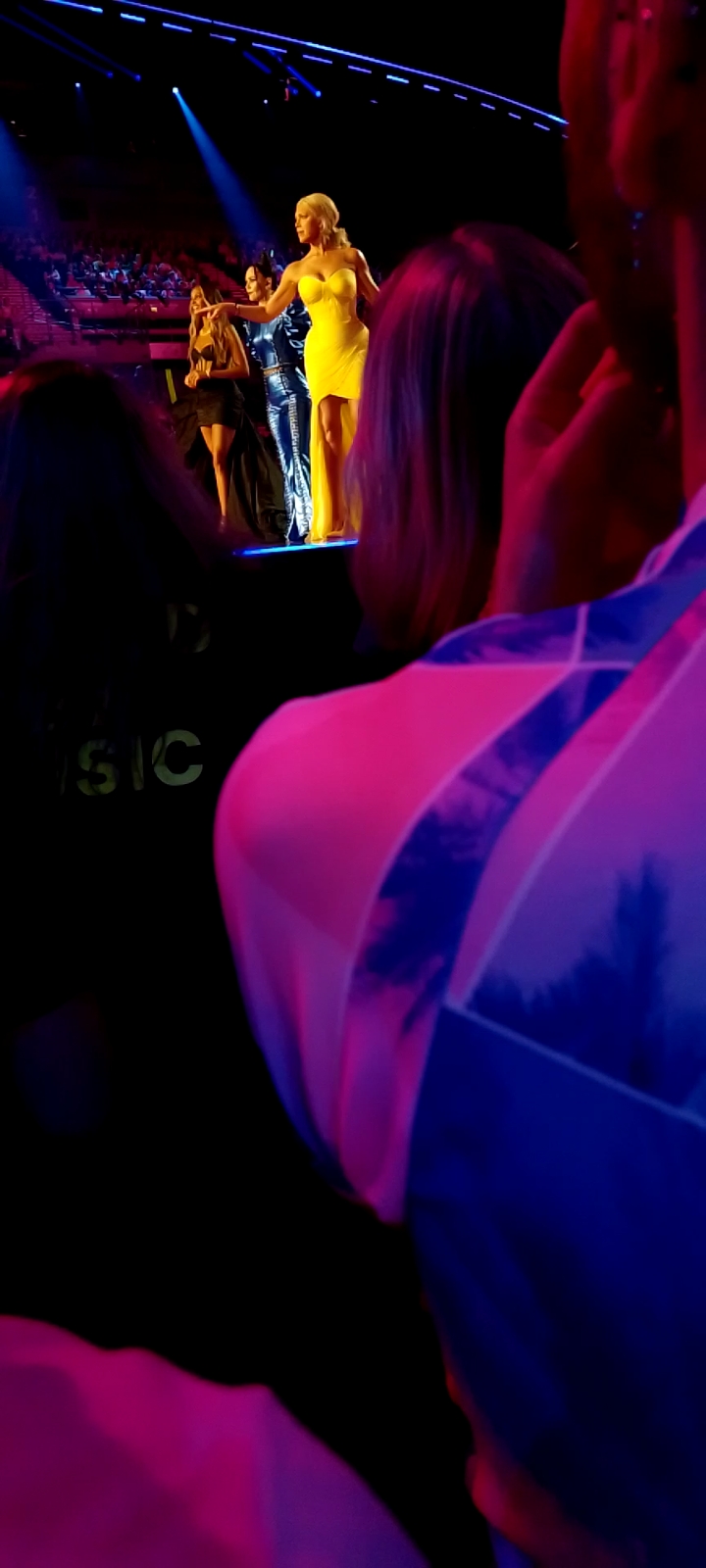
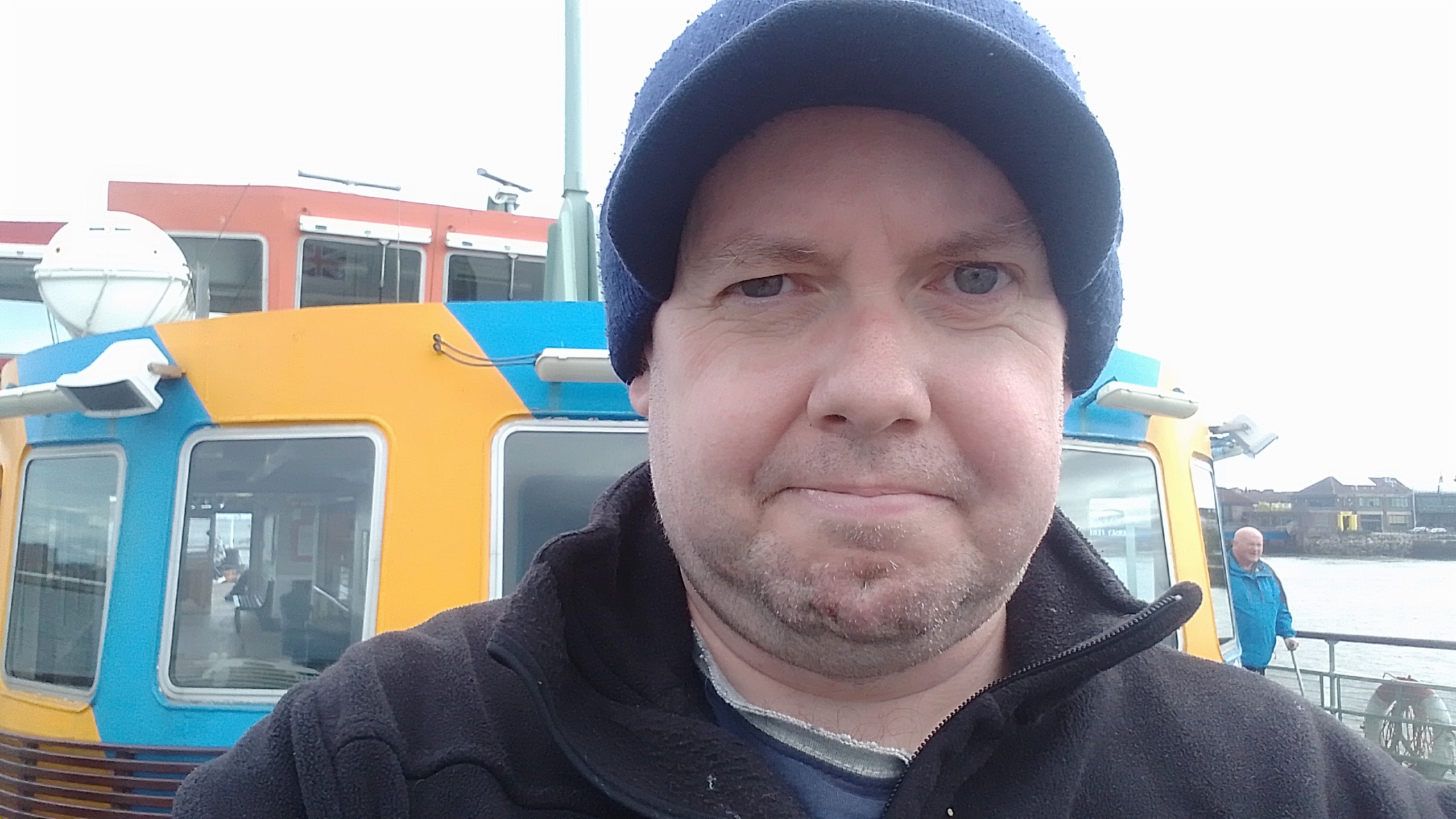
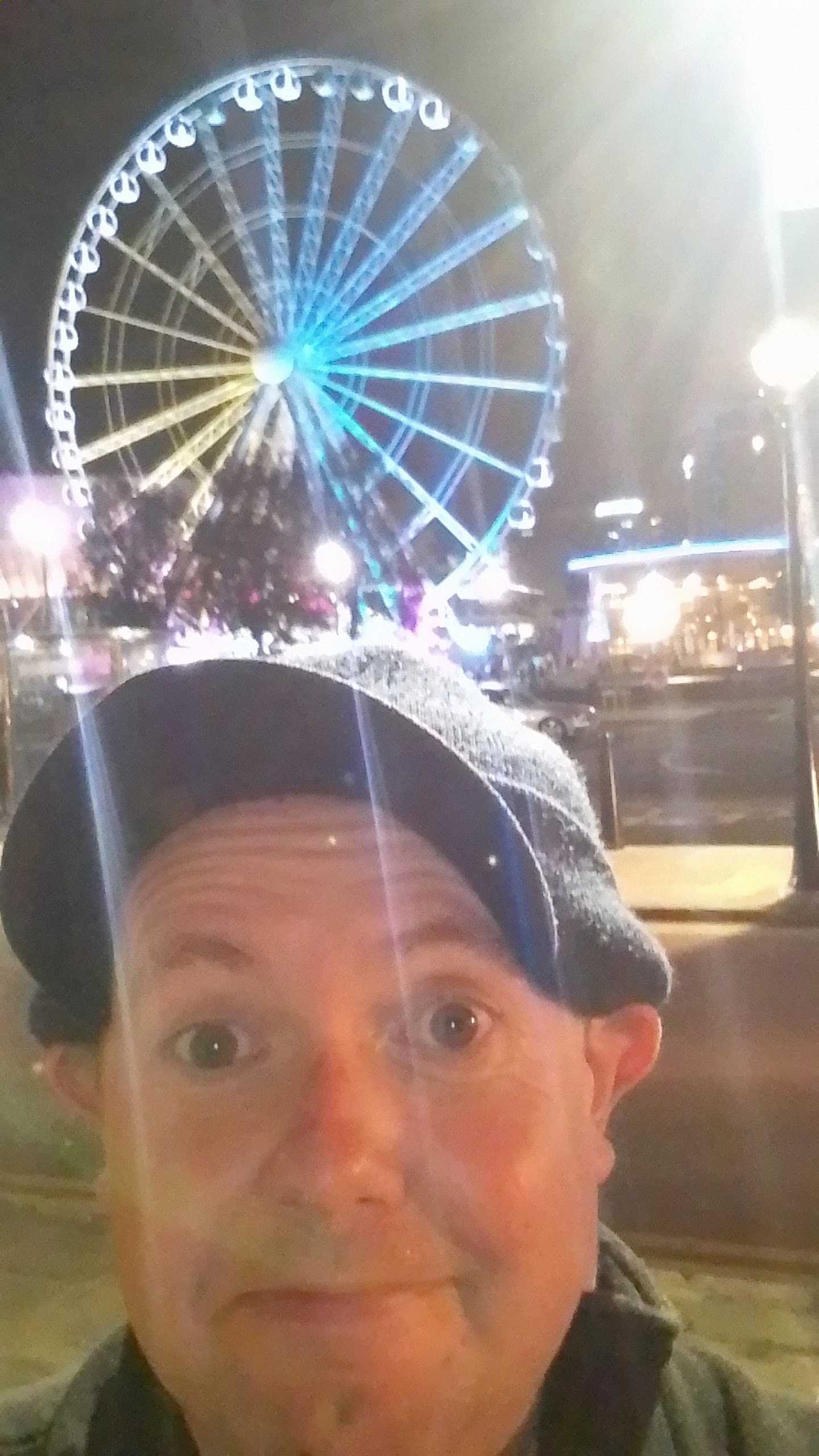
Photos of my Eurovision pilgrimage to Liverpool (before it went a bit wrong)

I'm still feeling and looking distinctly grim after my freak accident in Liverpool late on Thursday night.  However, I took about fifteen thousand photos and videos before that happened, so I'd probably better make sure they don't all go to waste.  

I'm sure I wasn't alone in being totally livid with the BBC in the autumn.  It wasn't so much the fact that Glasgow wasn't selected as the Eurovision venue - my assumption was always that it would go to Manchester, because the BBC's default attitude seems to be that if they do stuff in Manchester, that's the 'outside of London' box ticked.  I wasn't that far wrong, because Liverpool and Manchester are effectively part of the same northwest of England urban area, and the BBC thus probably said to themselves "oh yeah, Liverpool is like Manchester but with the Beatles".  No, it was the way it was done that I found so objectionable, with what looked in retrospect like a sham 'run-off' between Liverpool and Glasgow.  I suspect Liverpool had already been pencilled in by that point, and the intention was to give Glasgow an utterly meaningless 'runners-up' title, while generating an extra TV programme to reveal the result.  If the run-off hadn't been a sham, it's very hard to see how Glasgow wouldn't have won in a fair head-to-head with Liverpool.  Having now been to the M&S Bank Arena a couple of times, I can say for sure that it's not quite in the same class as the Hydro - not only does it have a smaller capacity, it also feels less modern and has a less striking appearance and shape.  It maybe does have more impressive exterior surroundings, but that's not especially relevant for an inside event intended mainly for a TV audience.

The BBC have made sure that Scotland is totally erased as far as Eurovision is concerned.  The past participation of Wales in the Junior Eurovision Song Contest, and of both Scotland and Wales in the Eurovision Choir contest, is a pretty strong signal that the EBU wouldn't stand in the way of Scottish representation in the main event and that the roadblock is political in nature and resides at the BBC.  If the BBC are so hellbent on ensuring that Scotland can only ever be represented by a United Kingdom entry, I'd suggest there's a special responsibility on them to ensure that Scottish artists and songwriters get a fair crack of the whip in the UK selection process, and that simply hasn't been the case for many, many decades.  As far as I can see, there has been no Scottish involvement in the UK entry since 1988.  When national finals have been used to select the entry, Scotland has been very severely under-represented among the finalists.  That pattern is not happening by chance - I'm not saying it's necessarily intentional, but there's clearly some systemic issue at play which the BBC just have no interest in putting right.  There finally was a golden opportunity to make some amends by simply allowing the objective choice to be made that the Hydro was a more suitable venue than the M&S Bank Arena, but instead the BBC cynically used Glasgow as a stunt prop.  I think we're entitled to draw the obvious conclusion and to be angry about it.

As Colin Beattie might put it, Scotland is still "woven into" Eurovision history, because there have been Scottish winners as both singer (Lulu in 1969) and songwriter (Bill Martin in 1967), and Edinburgh hosted the contest in 1972.  But that was all a very, very long time ago, and to ever get out of this Eurovision Antarctica, it's pretty clear that we're going to need political independence.  Fair representation is never going to be granted by the BBC.

But anyway, a Eurovision just 200 miles from where I live is still a once in a blue moon event, so as a lifelong fan I thought I'd better at least try to buy tickets, even though I've been avoiding indoor events because of Covid (I live with a vulnerable person).  The ticket sales famously turned into an absolute shambles, and although I was somehow successful in getting a ticket for each semi-final, I found it a very stressful process, because you know that if you make just one wrong move (like closing the browser tab by accident) you'll have blown your chance.  If I was Prime Minister for a day, I think one of the things I'd do is pass a law stating that ticketed events that are likely to be heavily over-subscribed should have a lottery system, just to take the stress out of it and to ensure everyone has a fair chance.

Here are some photos from my three days in Liverpool.  It was an interesting trip, because Liverpool is just about the only large UK city I'd never previously been to.  I did a bit of sightseeing and ferried 'cross the Mersey.  The two semi-finals were very different experiences from each other - on Tuesday I had a seated ticket right at the back on the river side of the hall, and on Thursday I had a standing ticket (you can see my battered 'floor' wristband in one of the photos).  I tried to strategise a way of getting as close to the front as possible on Thursday, but I think the dice may have been loaded slightly, with some ticket-holders being more equal than others.  There were a couple of Australian guys behind me in the queue who seemed to be taking the strategising even more seriously than I was, and when we got into the hall, they said "Where the f*** did those people come from?! We're f***ed!!!"  But actually there were only about three people between me and the stage, so I think I did pretty well on the whole.  I was close enough that I could feel the heat from the pyrotechnics.


I must just note a head-scratching moment from the warm-up act on Tuesday night.

"Do you remember 1978?"

(A Ba Ni Bi?)

"I said: do you remember 1978?"

(Well, not personally, but the winner in 1978 was definitely A Ba Ni Bi.)

"I can't hear you: DO YOU REMEMBER 1978?"

(Surely not The Bad Old Days by Coco?  It only finished eleventh.)

And then he started playing Waterloo by Abba, which of course won in 1974.

Friday, May 12, 2023

Mishap in Liverpool

I had a freak accident last night and ended up spending half the night in hospital.  I was walking in the Albert Dock area of Liverpool (where I had just been to the Eurovision semi-final), and I tripped over two very large chains that for some inexplicable reason seem to be a permanent fixture across a pedestrian route. It was dark, but in all honesty it would have been easy for the same thing to happen in broad daylight if you weren't paying attention.

I'd like to thank the two art students who called an ambulance and sat with me for 40 minutes or so until it arrived, the parademics who assessed me and took me to hospital, and the medical staff who looked after me when I got there.  They were all brilliantly friendly and helpful, Liverpool seems to be such a friendly city.  I had a few X-rays and a tetanus jag, but I'm told the wounds are not as bad as they look.

This does give me a little insight into the current state of NHS England, though.  I was seen within three hours of arriving at hospital, but the waiting time to see a doctor seemed to be around 6-8 hours.  There was a young woman ahead of me who seemed to be very ill and the nurse was apologising for the fact he had to ask her to spend the whole night in a waiting room.  "I know it's s***" he said.

I'm not sure I still have the heart to do a blogpost about my Eurovision trip after all this, but I'll see how I feel later on.  And for the person who asked about the Survation / True North poll, I'll try to post about that at some point.

Monday, May 8, 2023

The tectonic plates shift as Pete Wishart - yes, PETE WISHART - declares that the referendum option is closed off and that every election from now on must be a de facto vote on Scottish independence

Pete Wishart's position is now essentially identical to the one Ash Regan took during the leadership election (which, with characteristic but truly comical delusions of grandeur, a certain Tory voter in Somerset is claiming as his own policy which Ms Regan merely "adopted"!).  This is odd in a way, given how scathing Wishart was towards Regan during the campaign, but let's not be churlish about it.  You'd only need to wind the clock back around a year or so to find Wishart positioning himself as the most vehement opponent of plebiscite elections, and blasting those of us who believed in the idea as "absolute menaces".  We initially thought his screeching U-turn on the subject was nothing more than a sign of robotic loyalty to the SNP leadership, but it can no longer be dismissed in that way.  By maintaining his belief in the Sturgeon plan after Yousaf has ditched it (and indeed by demanding that the SNP go even further than the Sturgeon plan), Wishart is actually rebelling against the SNP leadership, so his reversal of stance can now be regarded as authentic.  That may not be a game-changer in itself, but it certainly has the potential to help shift the dial somewhat.

It may be that Nicola Sturgeon's conversion to the idea of a plebiscite election caused Wishart to look at the proposal with a fresh eye, free from his prejudices against the people who had previously been putting it forward, and he suddenly recognised that it made perfect sense.  I've said this many times, but even if you put the SNP's self-interest ahead of independence, shying away from trying to deliver independence at elections is an illogical thing to do, because it demotivates your own support base, increases the abstention rate, and in Westminster elections may even lead to SNP voters drifting off to Labour.  Suppose you're a committed independence supporter in Glasgow, but you also loathe the Tories, as all right-thinking people in Glasgow do. In the 2024 general election, you're faced with two competing pitches - Labour saying "vote Labour on Thursday, the Tory government will be gone by Friday", and the SNP saying "vote SNP to send a message to Westminster".  Which of those two would you find most inspiring?  Whereas if you replace the meaningless waffle of the SNP's pitch with a concrete commitment to negotiate an independence settlement if pro-indy parties win more than 50% of the vote, and end London rule once and for all, it's a totally different proposition.  You need to give people something to vote for.

My anger about the above is totally genuine, because it literally is the case that listening to the "do nothing" advice from the likes of James Mitchell has got the SNP into the almighty mess they are currently in, with all the consequences for the independence cause.  I vividly recall that, just after the exit poll was published on the night of the 2017 general election, I decided to take the SNP manifesto at its word, and point out in a tweet that the "triple lock mandate" for an independence referendum had been completed by the SNP winning a majority of Scottish seats at Westminster.  It didn't matter that 35 seats (or 34 as the exit poll initially projected) was a sharp reduction on before - it was still a very clear majority, and according to the terms of the manifesto, a referendum should thus swiftly follow.  Professor Mitchell, who I don't think I had ever previously interacted with, instantly jumped on my tweet with absolute fury.  "This is insane!" he said.  "There isn't going to be an independence referendum!"  By which he meant that he thought there shouldn't be a referendum and he was determined to ensure that there wasn't, and he was enraged by any narrative that might threaten his attempt to use the general election result to kill off the whole plan.

Well, he got his way, and the most important consequence of that was suddenly the SNP didn't have a referendum to spend their ring-fenced fund on.  Regardless of whether it turns out that there was anything wrong from a legal point of view with what they did with the money instead, the fact remains that this chain of events killed the Sturgeon leadership.  The police investigation would never have happened if there'd been a referendum or de facto referendum to spend the money on, and without the police investigation Sturgeon would never have been forced out.  The SNP would not have suffered a slump in support due to the installing of a much less popular leader and a string of dreadful headlines about alleged corruption and/or illegality.  

You'd have thought Mitchell might be somewhat chastened by having demonstrably offered such dud advice, but instead he's urging the SNP to double down on its idleness by not even using any opportunity thrown up by a hung parliament (and I agree with him that any such opportunity is improbable) to bring about independence.  With the greatest of respect to the man, the idea that SNP voters (especially the rump that is left after the Humza slump) don't want their party to seize opportunities to deliver independence when they're there, and to just be cowed into pathetically going along with whatever Starmer wants, is pretty obviously bogus.  

In any case, the choice between unconditional support for Labour in a hung parliament and "letting the Tories in" is a false choice.  Much more probable is that the SNP would let Labour stagger on as a minority administration but use guerilla tactics in parliament to ensure Starmer would never be sure of whether he'd get his business through, leaving him "in office but not in power", to use Norman Lamont's famous phrase.  The hope would be that this might drag Labour reluctantly to the negotiating table, with the prize for them being a stable spell in government.

*  *  *

Labour people like Blair McDougall criticised the SNP for "joining with the Tories" in talking down Labour's gains in the English local elections last Thursday.  The reality is, though, that those gains were pretty easy to talk down, because Labour objectively underperformed.  According to the BBC, Labour's lead over the Tories on projected national vote share was nine points, and according to Sky it was only seven points.  That's hung parliament territory, not Labour majority territory.  To put this in context, both Tony Blair and David Cameron enjoyed double-digit leads in local elections in the run-up to taking power.  Putting on a Canadian accent, Thursday night was another trrrrrr-ible night for the Conservatives, but that trrrrrrr-ibleness was inflicted by several parties, not just by Labour, or even primarily by Labour.

The latest episode of the Scot Goes Popcast aims to win a place in the Guinness Book of Records as the world's shortest podcast as I give my succinct verdict on the local elections.


* * *

I launched the Scot Goes Pop fundraiser for 2023 a few days ago, and the running total has now passed the £1000 mark.  The target figure is £8500, however, so there's still quite some distance to travel.  If you'd like to help Scot Goes Pop continue by making a donation, please click HERE.  Many thanks to everyone who has donated so far.

Thursday, May 4, 2023

SCOT GOES POP FUNDRAISER 2023: Help keep a key part of the pro-independence alternative media shining bright


It's just a coincidence, but this Wednesday marks the fifteenth anniversary of the start of Scot Goes Pop in 2008 - it began with a post about the results of the local elections in England and Wales, so I can always remember when it's that time of year.  In the intervening decade-and-a-half, Scot Goes Pop has provided extensive opinion polling and election analysis, corrected umpteen inaccuracies and distortions in the mainstream media about Scottish poll results, commissioned eight full-scale opinion polls of its own from leading polling firms, provided fiercely independent political commentary, and produced numerous podcasts and videos.  But if I'm going to keep the site going, the time has come when I'm once again going to have to ask for your help.

After Scot Goes Pop commissioned no fewer than two opinion polls in March (the Find Out Now poll showing an outright pro-independence majority, and the Panelbase poll showing that Kate Forbes was the public's clear preference for First Minister), I mentioned that the coffers were getting a bit emptier, and that I would have to start a new annual fundraiser as soon as the leadership election was over, especially bearing in mind that last year's fundraiser fell well short of its target.  However, I couldn't have foreseen the extent of the chaos that would unfold within the SNP over subsequent weeks, so I initially decided it was the worst possible time to start a crowdfunder and that I'd be better off trying to keep things ticking over with lower-key fundraising at the bottom of each blogpost. That plan hasn't really worked out.  There have been several generous donations over the last couple of weeks, but they've come to around £200 in total, and that's not the kind of level at which I can plan for the future.  It's time to bite the bullet, and to find out where I stand and whether Scot Goes Pop can continue to be sustainable.  If the new fundraiser falls well short of its target in the way that last year's did, my intention will be to continue for however long the funds make possible and to then stop.  (Obviously 'stop' is unlikely to mean a total cessation, because I'm sure I'll occasionally feel the burning desire to get something off my chest, but the posting rate will drop dramatically.)  I'll also give the same undertaking that I've given during past fundraisers - if for unforeseen reasons I have to close Scot Goes Pop before the funds are used up, I'll use or disperse the remaining funds to benefit other pro-indy causes.

If you're one of the people that has donated over recent weeks, please just ignore the new fundraiser, and nobody else should feel under any pressure to donate either - these are difficult times for all of us.  However, if you're unable to donate, one very helpful thing you could do would be to share the fundraiser on whichever social media platforms you use.  Facebook shares would be particularly welcome, because for ultra-complex reasons that would take about 57 years to explain, I've had to deactivate my own Facebook account and can't post there directly for the time being.

Below is my pitch from the new fundraising page

Hi, I'm James Kelly, and for exactly 15 years (it all started on 3rd May 2008), I've been writing the pro-independence blog Scot Goes Pop.  With your help, I hope to keep the blog shining bright over the coming months as a key part of the pro-independence alternative media.

Scotland needs a Yes media more than ever during these tricky times, and to a limited extent we do have one.  However, given the circumstances, I'm not sure that a media that is slavishly loyal to the status quo of Yes politics can contribute as much as one that looks forward to a new vista in which pro-independence parties will have changed and reformed to rebuild public trust and to once again become credible vehicles for independence in the near-term.  That's the type of media that I hope Scot Goes Pop can be part of.

And with your help it will also continue to provide the unique polling and election analysis service from a pro-independence perspective that it has been known for over the years.  Countless inaccuracies and distortions in the unionist-oriented mainstream media about Scottish opinion poll results have only come to light or been corrected because Scot Goes Pop identified them.  And there have even been eight full-scale Scottish opinion polls commissioned by Scot Goes Pop itself, most recently two in March of this year.

The existence of the blog has led to many spin-offs.  I've written extensive polling and election analysis for The National, including daily constituency profiles during the 2019 general election campaign and the 2021 Scottish Parliament election campaign.  I've been an iScot columnist since 2017, and for many years I was a columnist on both the TalkRadio website and the International Business Times.  In the run-up to the 2014 independence referendum, I may well have been the most-read pro-independence blogger in Scotland, due to the good fortune of many of my IBTimes columns being syndicated on Yahoo.  I've also been interviewed on TV and radio on numerous occasions, including on BBC Breakfast, BBC Radio Five Live, Al Jazeera, CTV News (Canada) and the Bauer radio network.

However, blogging is a very time-consuming process, especially during elections or other busy periods when there may be several polls a day to cover. Like all writers, I have to keep body and soul together while I write, and running a general fundraiser every year helps me to do that, while also giving me the flexibility to drop everything and write a blogpost whenever a new poll comes out.  If the funds fall well short of the target, my aim will be to keep going for as many months as I can.  

Click here if you'd like to donate.

Direct payments can also be made via Paypal.  My Paypal email address is:

jkellysta@yahoo.co.uk

If you do have a Paypal account, that's probably the best method for quite a few reasons.  If you wish, you can add a note saying "for the fundraiser", but it'll be obvious what the payment is for anyway.

I know one or two people tend to prefer direct bank transfer, so if you want to do that, drop me a line and I'll send you the necessary details.

Wednesday, May 3, 2023

Doubts deepen over Humza Yousaf's future as leader as new Redfield & Wilton poll shows SNP slipping to second place on the Holyrood regional list for the first time in many years - and Yousaf's personal rating has slumped by ten points

My jaw dropped to the floor a few days ago when I saw an anonymous source close to the Yousaf leadership claiming in the Financial Times that the team had been heartened by the opinion poll results published since their man became leader just over a month ago.  It's true that independence support has generally held up pretty encouragingly, but for the SNP itself there has been a succession of poor results under Humza, some of them showing a loss of the pro-independence majority at Holyrood, and at least one of them showing a loss of the SNP majority in Scottish seats at Westminster.  I can only assume that the source was clinging to the fact that every poll result so far had shown the SNP just about holding onto a lead of some description - but with the publication of today's Redfield & Wilton poll, even that is no longer true.

Redfield & Wilton poll (30th April - 2nd May 2023):

Scottish voting intentions for next UK general election:

SNP 35% (-1)
Labour 32% (+1)
Conservatives 18% (-1)
Liberal Democrats 9% (-1)
Greens 3% (+1)
Reform UK 2% (-)

Seats projection (current boundaries, with changes from 2019 election): SNP 25 (-23), Labour 22 (+21), Conservatives 7 (+1), Liberal Democrats 5 (+1)

That's the worst Westminster seats projection we've seen for the SNP since the mini-implosion of 2017.  The pro-independence majority would be lost by some distance - the unionist parties would have 34 seats in combination, easily outcounting the SNP's 25.  The SNP would just barely remain the largest single party among the Scottish contingent at Westminster - but let's be honest with ourselves.  On these numbers the SNP are probably heading for defeat at the hands of Labour, unless they replace Humza Yousaf with a more popular leader.  Their lead is too fragile to have much chance of withstanding the 'away fixture' of a UK general election.

It's worth identifying some of the Yousaf-supporting MPs who are now projected to lose their own seats as a direct result of getting behind such an unpopular leadership candidate.  They include: Alison Thewliss, Anne McLaughlin, Deidre Brock, Angela Crawley, Owen Thompson, Chris Stephens, Martin Docherty-Hughes, Tommy Sheppard, and Anum Qaisar.

Scottish Parliament constituency ballot:

SNP 36% (-2)
Labour 32% (+4)
Conservatives 18% (-)
Liberal Democrats 8% (-2)
Greens 2% (-1)
Reform UK 2% (-)
Alba 1% (n/a)

Scottish Parliament regional list ballot:

Labour 27% (+3)
SNP 25% (-5)
Conservatives 19% (-)
Greens 13% (+2)
Liberal Democrats 10% (-3)
Reform UK 2% (-)
Alba 2% (n/a)

Seats projection (with changes from 2021 election): SNP 39 (-25),  Labour 36 (+14), Conservatives 24 (-7), Greens 18 (+10), Liberal Democrats 12 (+8)

The SNP can't expect to suffer the horrific loss of 25 seats and still have a pro-indy majority at the end of that process, and even with a very high number of Green list seats, this poll inevitably points to a unionist-majority parliament.  Labour, the Tories and the Lib Dems would have 72 seats between them, while the SNP and Greens in combination would have only 57.  The SNP would remain the largest single party, so it's possible they might be able to cling on as a much-weakened minority government, but even that would be far from certain.

As ever, the clearest evidence of the drag effect Humza Yousaf is having on the SNP's support can be found in the net approval ratings of party leaders.  Yousaf's rating has slumped by ten points, leaving him even further behind Anas Sarwar and Keir Starmer than before.  (Remember that polls during the leadership election found that Kate Forbes fared much, much better against Sarwar and Starmer, and she often had superior ratings to them.) Even more scarily, Yousaf is only more popular than Rishi Sunak and Douglas Ross by a very small margin.

Net approval ratings of leaders:

Anas Sarwar (Labour): +3
Keir Starmer (Labour): +2
Humza Yousaf (SNP): -17
Douglas Ross (Conservatives): -21
Rishi Sunak (Conservatives): -22

(There's also a leadership question with a different format that has Yousaf slightly ahead of Sarwar, but even on that one, Yousaf's lead has slumped since the last Redfield & Wilton poll, and now stands at a statistically insignificant two points.)

Tellingly, Yousaf is much more unpopular than his own party - the SNP collectively have a more respectable net rating of -4, even after the string of recent damaging revelations.

Net approval ratings of parties:

Labour: +12
SNP: -4
Liberal Democrats: -9
Greens: -12
Reform UK: -30
Alba: -36
Conservatives: -38

So the constant refrain from the SNP's Trendies that "Alba are the most hated party in Scotland" turns out not to be true - it's the Tories who hold that accolade.  That said, minus 36 is obviously a very poor showing for Alba, and can probably be explained almost entirely by their association in the public consciousness with Alex Salmond, whose reputation has been trashed by the media since his trial, in spite of the fact that he was acquitted on all charges.  Bear in mind, though, that the Tories are on course to win plenty of seats with an approval rating of -38, so Alba's rating of -36 certainly doesn't preclude the possibility of a few list seats in 2026.  Only around 6% of the vote would be required to achieve that breakthrough.

*  *  *

FIFTEEN YEARS OF SCOT GOES POP: I could have wished to mark the occasion with a better poll, but today is the fifteenth anniversary of the start of Scot Goes Pop.  It all began on 3rd May 2008 with this post about Plaid Cymru's good showing in the Welsh local elections, and Boris Johnson defeating Ken Livingstone to become Mayor of London.  Thank you for all your amazing support over the last decade-and-a-half.

A couple of days ago, I launched the Scot Goes Pop fundraiser for 2023, and so far it's only around 9% of the way towards its target figure.  If you'd like to donate, please click HERE, and many thanks to everyone who has already contributed.

Sunday, April 30, 2023

Nicola Sturgeon's enforced departure looks increasingly like a classic case of 'be careful what you wish for' - because it led directly to the SNP abandoning all plans to win independence

There's an interview with Alex Salmond in the Telegraph in which he makes a fascinating observation that actually contradicts one of the key assumptions of many on the radical end of the independence movement.  He suggests that Nicola Sturgeon's resignation couldn't have been pre-planned, because she was in the middle of a two-part strategy on independence (the Supreme Court referral followed by a de facto referendum) and he didn't know of any other leader who would willingly relinquish office with half of a two-part strategy unfinished.  That suggests she would have stayed in office if it hadn't been for the police investigation, and would have seen the de facto referendum through, either in 2024 or 2026.  I think that's probably right, notwithstanding my paranoia immediately after the resignation that it had been choreographed months in advance as the only conceivable way of getting the SNP out of a promise on a de facto referendum that had been practically signed in blood.

The police investigation wasn't self-initiated, of course, it only came about because of complaints from Yes supporters, presumably those who had seen questions about the SNP raised by Wings Over Scotland and one or two other websites.  Now, I certainly don't criticise anyone for lodging a complaint and setting this process in motion - they did absolutely the right thing if their primary concern was doubts over the SNP's honesty and probity in its dealings with members.  However, if anyone was motivated more by the Wings narrative that Nicola Sturgeon was the main blockage to independence, and saw a complaint mostly as a tactic to try to dislodge her, it's not hard to see how that's backfired.  If she had remained in harness, we would probably have had the de facto referendum, and we would have had a chance of winning it with a popular SNP leader, and indeed with a popular SNP that had not yet been tarnished by the revelations of recent weeks.  Instead, Nicola Sturgeon's natural allies, who clearly thought she had taken leave of her senses by actually trying to deliver independence, saw her sudden departure as Christmas come early, and gratefully seized the unexpected opportunity to put a stop to the SNP as a party actively trying to win independence for the first time since at least 1942.  And for good measure, they've unnecessarily lumbered the SNP with a new leader who the public dislike and regard as incompetent, and who is thus much less likely to win any vote on independence, even if it did happen.

In short, the independence cause is now in a much worse position due to the police investigation having been triggered.  Of course we're only in the foothills of this ongoing story, and Humza's unpopularity and close association with the Sturgeon leadership puts him in a very vulnerable place.  So something constructive may yet come out of this chaos which will wipe the slate clean with a new leadership and repair a lot of the damage.  But so far, it's a case of 'be careful what you wish for'. 

*  *  *

There have been further signs over the last 48 hours that Labour's big lead over the Tories at GB-wide level is shrinking significantly.  With at least a year to go until the likely general election date, that brings a hung parliament back into play - perhaps the joker in the pack that could get the SNP off the hook, although no-one should be relying on it, because it remains only an outside chance.  Labour's lead in the new YouGov poll is fourteen points, which is the lowest YouGov have shown since mid-September, just before the Trussmageddon reached its peak.  And Omnisis are showing the lead down to 17 points, the second-lowest in any Omnisis poll since September.  On the other hand, Opinium have Labour rebounding slightly to an 18 point lead, but that's probably just sampling variation at play.

GB-wide YouGov poll (26th-27th April 2023):

Labour 41% (-2)
Conservatives 27% (-1)
Liberal Democrats 11% (+1)
Greens 7% (+1)
Reform UK 7% (-)
SNP 4% (+2)

Scottish subsample: SNP 34%, Labour 27%, Conservatives 20%, Greens 7%, Liberal Democrats 7%, Reform UK 2%

GB-wide Omnisis poll (27th-28th April 2023):

Labour 45% (-2)
Conservatives 28% (+1)
Liberal Democrats 10% (+3)
Greens 6% (-)
Reform UK 6% (-1)
SNP 4% (-)

*  *  *

Scot Goes Pop can only continue with the help of donations from readers (and if everyone reading this today contributed £5 each, the problem would be instantly solved for another year or so, but alas, life is never quite as simple as that!)

Direct payments can be made via Paypal.  My Paypal email address is:  jkellysta@yahoo.co.uk

If you don't have a Paypal account, last year's fundraiser page is still open for donations, and can be found HERE.

Many thanks to everyone who makes, or has already made, a contribution.

Saturday, April 29, 2023

Twelve serious questions for Humza and his supporters about his "Eternity Game" for winning independence

There's an article linked to prominently on the BBC News homepage this morning, entitled "SNP plays longer game in bid for Scottish independence" and stating that there has been a significant shift in position since Nicola Sturgeon was leader.  In what sense this is 'news' is a complete mystery, because it was clear from the day Humza Yousaf announced his leadership campaign that this is what would happen if he was elected - he promised to abandon all plans for winning independence and that is exactly what he has done.  Nor is it newsworthy to wheel out John Curtice with approving words about the SNP climbdown on independence, because he was always a fierce critic of Ms Sturgeon's de facto referendum policy and consistently urged her to ditch it and revert to ineffectually begging for a Section 30 order.  Whatever his pedigree as a polling expert, Professor Curtice has always been as unable as any of his fellow critics of the de facto referendum to explain exactly how begging for a Section 30 order is a superior plan given that the UK Government have already decided never to grant one in any circumstances.

Nevertheless, as I know from wading through astroturf propaganda in the moderation queue of this blog on an almost daily basis, Yousaf's supporters very much want us to believe that abandoning all plans to win independence does not in fact mean that all plans to win independence have been abandoned.  And the BBC are breathlessly reporting the "plan" to build a sustained supermajority for Yes and then ask for a Section 30 order as if it's somehow a real thing rather than a cover story to keep SNP members quiet while Yousaf gets on with non-independence-related stuff for whatever time remains of his leadership.  So if even the state broadcaster want us to take the non-plan seriously, it's about time some serious questions were answered to flesh it out, make it much less vague, and expand on the underlying thinking behind it.  Let's see if any passing Humza fans can oblige (although they may need to call HQ first to get a new script).

1) Do you honestly not understand why, two-thirds of a decade after Nicola Sturgeon first announced a referendum that has yet to be delivered, people burst out laughing when you say now is the time to *start* playing a longer game on independence?

2) As we self-evidently have been playing a longer game on independence over the last two-thirds of a decade, one that was supposed to at long last reach its culmination over the next 6-18 months with either a referendum or a de facto referendum, doesn't replacing that interminably slow process with a far slower one mean that you'd be more honest in calling your new plan "the eternity game"?

3) Isn't there a contradiction in the fact that you're demanding a big increase in support for independence before a vote on independence can be called when all the evidence suggests that big swings in public opinion are far more likely to occur after a vote is called and all-out campaigning is underway?  If we learned any lesson from 2014, that's the lesson. The biggest swing to Yes occurred only around 2-4 weeks before referendum day.

4) If you're now saying that it's only appropriate to request a Section 30 order after a sustained supermajority has been attained, why the hell has Humza requested a Section 30 at least three times already in the month he's been leader?  Can you honestly not see the plot-hole here?

5) What does a 'supermajority' mean in concrete terms?  Does it mean 52%?  55%?  60%?  A well known person down south suggested to me recently in all apparent seriousness that 75% would be a perfectly reasonable target number - surely you don't mean that?  We really do need you to set an exact target number and to stick to it, because if you continue with the current vagueness, the well-founded suspicion will be that no matter how high Yes support rises, you'll just say "that isn't enough yet, we'll know what enough looks like when we see it".

6) What does 'sustained' mean in concrete terms?  Does it mean six months?  A year?  Five years?  And are you saying that if even one outlying opinion poll shows Yes below the target figure (whatever the hell the target figure is), the sustained sequence is broken and we have to start all over again?

7) When you say "the barriers to independence will melt away" as soon as Yes support rises high enough, what does that mean in concrete terms?  Does it mean the UK Government will suddenly agree to negotiate an independence settlement there and then?  Does it mean they will agree to an independence referendum?  Or does it mean something else, and if so, what?

8) Between mid-2020 and the early months of 2021, there was a sustained supermajority for independence.  Every single opinion poll conducted during that period showed a clear Yes lead, which at times rose as high as 56% or 58%.  (I remember it well, because I personally commissioned three of the polls during that long sequence, including the very first one in June 2020.)  So why didn't your prediction come true that the barriers to independence would melt away in those exact circumstances?  Why didn't it even come close to coming true?  Be careful before dismissively saying that the best part of a year is nowhere near "sustained" enough, or that 56%-58% is nowhere close enough to a "supermajority", because the implications of any such statement would be mind-boggling.

9) On what logical basis can you possibly argue that the UK Government would be more likely to agree to a Section 30 order if a sustained supermajority for Yes is established, given that they would have even less of an incentive to allow a referendum to take place once it looks unwinnable for the No side?

10) Why are you effectively contracting out Scotland's democratic voice to opinion poll firms mostly based in London?  There's no other way that a 'sustained supermajority' can be measured other than through public opinion polls, and yet London polling companies have a track record of unionist bias, unconscious or otherwise - most notably the notorious 'Kellner Correction' in the run-up to the 2014 indyref.  There's a particular question mark right now over whether weighting poll results by recalled votes in a referendum that took place a decade ago could be leading to a significant underestimate of the Yes vote.

11) If a simple 50% + 1 majority for independence is no longer sufficient for you, that means a substantial number of No voters will have to be won over.  Don't you understand, therefore, that this plan does not have a hope in hell of working until Yousaf is replaced as leader?  All of the polling evidence during the leadership election confirmed that any limited public sympathy for Yousaf is largely confined to voters in the Yes camp, and that No voters mostly loathe him.  To win over enough No voters to get a sustained supermajority, you'd need a leader like Kate Forbes, who polls showed was liked and trusted in substantial numbers across the constitutional divide.  Doesn't simple logic inexorably dictate that you're going to have to overcome your hang-ups about Forbes and unite behind her as leader sooner or later?  Always assuming, of course, that you're remotely serious about this so-called "plan to win independence" in the first place.

12) The whole reason Nicola Sturgeon promised a referendum back in 2016/17 is that Scotland was set to be dragged out of the EU against its will.  The point of the vote, therefore, was not to guarantee a Yes vote or to guarantee independence, but to guarantee the choice that Scotland was entitled to.  Are you now arguing that Nicola Sturgeon was wrong to say that Scotland had a right to choose between Brexit and EU membership as an independent country, and that we can only 'earn' that choice, very, very belatedly, if we can prove to you that we can be trusted to vote in the 'right' way?  That certainly seems to be your position, and it doesn't say much for your belief in the principle of democratic self-determination.

*  *  *

Scot Goes Pop can only continue with the help of donations from readers (and if everyone reading this today contributed £5 each, the problem would be instantly solved for another year or so, but alas, life is never quite as simple as that!)

Direct payments can be made via Paypal.  My Paypal email address is:  jkellysta@yahoo.co.uk

If you don't have a Paypal account, last year's fundraiser page is still open for donations, and can be found HERE.

Many thanks to everyone who makes, or has already made, a contribution.