Thursday, January 13, 2022

The day that the Scottish Tories finally saw themselves through the contemptuous eyes of their Westminster masters

The controversial journalist David Leask may be surprised to learn that I don't have an encyclopedic knowledge of Russian history. But one thing I do know is that Bloody Sunday in 1905 was the pivotal moment when the populace started to see Tsarism for what it truly was.  Until then they had believed that their suffering was the fault of the Tsar's ministers and staff, who kept the truth from him.  They honestly thought he loved his people so much that if he had known what was happening, he would have been deeply shocked and would have been bound to help.  But when they attempted to petition him directly, they found he held them in exactly the same contempt and quickly ordered guns to be turned on them.

I suspect that, on a smaller scale, a number of Scottish Tories have had an equivalent epiphany over the last 24 hours.  Until now, they've probably assumed that when the UK government sneer at the Scottish Government, the contempt is directed solely at the SNP and at Nicola Sturgeon - and that will always have seemed absolutely fine, because rank and file Scottish Tory members, and indeed Scottish Tory voters, wholeheartedly share that contempt.  But suddenly they've been confronted with evidence that the contempt of London Tories is for Scotland and Scots as a whole, and that Scottish Tories are most certainly not exempt from it.  At the first sign of the duly elected leader of the Scottish Conservative party asserting himself, the Westminster mask instantly slipped and Douglas Ross was derided as a lightweight, who cannot possibly be taken seriously because he was speaking in Elgin, not London but flipping Elgin, which is apparently not somewhere that serious people go to speak.  So much for the pretty fiction that our imperial masters regard all the Tory towns of north-east Scotland as of equal value within #OurPreciousUnion to the gleaming metropolis.

Jacob Rees-Mogg went on to say that, although he has no time for the elected leader of the Scottish branch of his own party, he does regard the appointed Alister Jack as a more substantial figure.  Now why would that be, I wonder?  Perhaps because Jack went to the right sort of school (Glenalmond College) and speaks with the right sort of accent?  Whereas Ross actually does come across as a common or garden Jock.  He went to a state school and then studied at the Scottish Agricultural College - can you imagine? How frightful.  

I can't see that attitude going down well with most Scottish Tories - because after all Ross speaks like they do and Jack doesn't.

*  *  *

2021 was another epic year for Scot Goes Pop: we commissioned three full-scale opinion polls, and produced fourteen podcasts with well-known guests such as Alex Salmond, Chris McEleny and Yvonne Ridley.  If you'd like more of the same in 2022, donations are still very much welcome for the ongoing fundraiser.  Direct donations can be made via Paypal.  My Paypal email address is:  jkellysta@yahoo.co.uk

Or, if you prefer, you can donate via the GoFundMe fundraiser page, which can be found HERE.

Monday, January 10, 2022

"I will do everything within my power to do this" does not mean the same thing as "I will do this, this will be done"


*  *  *

2021 was another epic year for Scot Goes Pop: we commissioned three full-scale opinion polls, and produced fourteen podcasts with well-known guests such as Alex Salmond, Chris McEleny and Yvonne Ridley.  If you'd like more of the same in 2022, donations are still very much welcome for the ongoing fundraiser.  Direct donations can be made via Paypal.  My Paypal email address is:  jkellysta@yahoo.co.uk

Or, if you prefer, you can donate via the GoFundMe fundraiser page, which can be found HERE.

Sunday, January 9, 2022

And a second New Year's Resolution for the Yes movement: let's make 2022 the year Scotland gains a genuinely balanced six-party system

Back in the days when Scotland had a clear-cut four party system, there was sometimes a debate over whether it was a good thing or a bad thing that there was only one pro-independence party, and three unionist parties.  And the answer was of course that it could be either good or bad, depending on context.  In a first-past-the-post election, it was a huge advantage, because it meant that the pro-independence vote was united and the unionist vote was heavily split.  That's something both the Greens and Alba will have to take into account if we go into the next Westminster election without an independence referendum having taken place.  Lots of pro-independence candidates in direct competition with each other in a crucial FPTP vote may or may not be in the best interests of individual political parties, but it's certainly not in the best interests of the independence cause.

However, in terms of how the broadcasters cover the independence debate, the SNP v three unionist parties set-up was always a massive negative.  It allowed the BBC and others to give the unionist perspective three times the coverage of the pro-independence perspective, and innocently present that as "balance", "neutrality" and "objectivity".  It also made the pro-independence side look isolated, and the unionist side look broadly-based.

With the arrival of Alba, we can now do something about that.  If the new kid on the block successfully beds in, Scotland will have a truly balanced six-party system: three in favour of independence and three against.  It won't be the end of rigged TV debates, but they'll become a lot harder to justify.

In a sense, the six-party system is already here.  Alba have more members than the Scottish Liberal Democrats, almost as many local councillors as the Scottish Greens, and more Westminster MPs than Scottish Labour.  The main omission is that they don't have any MSPs yet, but that's balanced out by the fact that the Scottish Greens don't have any MPs.  But the broadcasters won't fully reward Alba for that position of strength until there's clear evidence that it can be sustained via votes in the ballot box.

And that's where the local council elections, now just four months away, come in.  If Alba can win any seats at all, that would be the first example of people being elected under the Alba banner, and overnight the party will gain vital credibility.

My suggestion on New Year's Day of a resolution for the Yes movement was to hold the SNP-Green government to their promises on the timing of an indyref, and not to accept the goalposts being shifted yet again.  To that I'll add a second resolution: let's use the local elections to at last get ourselves a balanced party system in Scotland.  That doesn't necessarily mean giving Alba your first preference vote if they're not your first choice party.  The beauty of the STV voting system is that all you have to do is give Alba some kind of ranking, and make sure you rank them higher than all of the anti-independence parties.  With many well-known incumbent councillors intending to stand for Alba, there's every chance of a breakthrough, provided the Yes movement can move beyond destructively tribalistic voting behaviour.  I will of course also be urging Alba supporters to rank SNP and Green candidates.

*  *  *

2021 was another epic year for Scot Goes Pop: we commissioned three full-scale opinion polls, and produced fourteen podcasts with well-known guests such as Alex Salmond, Chris McEleny and Yvonne Ridley.  If you'd like more of the same in 2022, donations are still very much welcome for the ongoing fundraiser.  Direct donations can be made via Paypal.  My Paypal email address is:  jkellysta@yahoo.co.uk

Or, if you prefer, you can donate via the GoFundMe fundraiser page, which can be found HERE.

Wednesday, January 5, 2022

A second memo to Chris Hanlon: "recalling" two parliaments that haven't existed since the early 18th Century is not a "relatively simple matter"

Chris Hanlon left a comment on my previous post about his support for a multi-option referendum featuring a Devo Max option.  I initially thought it was a spoof comment because it contained the line "DevoMinMax is the minimum devolution I can consent to", but I see from Mr Hanlon's opinion piece in The National that he does actually use the word "DevoMinMax", so it may well have genuinely been him.

In case you're wondering what the definition of "DevoMinMax" is, it would apparently consist of only three changes to the current set-up.  The Scottish Parliament would be made permanent, with Westminster stripped of the power to unilaterally abolish it.  The Sewel Convention would be enforced by statute, ensuring that Westminster can no longer legislate on devolved matters without Holyrood's express consent.  And the Scottish Parliament would unambiguously gain the power to hold an independence referendum at any time without requiring permission.

It's doubtful whether this is actually describing a system of devolution at all, because a parliament that can no longer be abolished or overruled has effectively become sovereign.  However, that's a point of pedantry, and in principle it would be perfectly possible to legally entrench Holyrood's existence in the way Mr Hanlon suggests - although that would involve restructuring the entire principle of unlimited Westminster parliamentary sovereignty.  But what does raise an eyebrow or two is Mr Hanlon's suggestion of how that restructuring would occur.

"That would probably involve amending the Acts of Union but that would be a relatively simple matter of recalling the Scottish and English parliaments solely to approve the pre-agreed changes."

Er, what English parliament? There isn't one.  There hasn't been one since April 1707.  So what Mr Hanlon appears to be suggesting is the recall of the English and Scottish Parliaments that existed prior to the Acts of Union more than three centuries ago.  Such an undertaking could be described in many ways, but I'm not convinced that a "relatively simple matter" is one of them.  There is no legal provision for recalling parliaments that no longer exist. Even if there were such a provision, all of the members of both parliaments are, not to put too fine a point on it, long since dead, and there is no viable way of replacing them with a new membership in line with the pre-democratic laws of the early 18th century.

Let's be frank: Mr Hanlon is not presenting us with a remotely serious proposition.

*  *  *

2021 was another epic year for Scot Goes Pop: we commissioned three full-scale opinion polls, and produced fourteen podcasts with well-known guests such as Alex Salmond, Chris McEleny and Yvonne Ridley.  If you'd like more of the same in 2022, donations are still very much welcome for the ongoing fundraiser.  Direct donations can be made via Paypal.  My Paypal email address is:  jkellysta@yahoo.co.uk

Or, if you prefer, you can donate via the GoFundMe fundraiser page, which can be found HERE.

Tuesday, January 4, 2022

Memo to Chris Hanlon: Devo Max is either impossible, or it's a trap

I may be quite unusual among independence supporters in that I would be inclined to take Devo Max if it was genuinely on offer.  I've always been more interested in the concrete reality of self-government than in metaphysical concepts like sovereignty.  For example, any one of the federal states of Austria (such as Salzburg) is theoretically more "sovereign" than the devolved territory of the Basque Country in Spain, and yet in practice the Basque Country has far more autonomy.  Genuine Devo Max, defined as the devolution of everything apart from foreign affairs and defence, would give us 80% of what we want, and yet would be much easier to attain a mandate for, because technically remaining within the United Kingdom would provide sufficient reassurance for many of the people who voted No in 2014.  It would also be a potential stepping stone to full independence, because after a few years of Devo Max the jump to independence would seem much less daunting.

But here's the snag: I've just listed several excellent reasons why genuine Devo Max will never be on offer from the UK government.  Why on earth would an administration that has been busily dismantling the current limited devolution settlement suddenly reverse course and willingly hand over most of the powers of a sovereign state?  For some inexplicable reason, Chris Hanlon of the SNP's Policy Development Committee thinks they will (including, apparently, the power to "sign international treaties").  He believes London will be more likely to agree to a multi-option referendum than to a 2014-style binary-choice referendum on independence.  

The polar opposite is true.  London will not swap a 50% risk of independence for a 90% risk of something that is very close to independence and that might swiftly lead to independence anyway.  That's exactly why the overriding priority for David Cameron's government in the negotiations leading to the 2014 referendum was to avoid a Devo Max option.  They were - remarkably - willing to concede votes at 16 and Scottish control over the date and the question wording just to ensure Devo Max wasn't on the ballot paper.

The only possible reason for supposing it might be any different this time would be if the Tories saw an opportunity to lay a trap, ie. by offering "Devo Max" in name only, or what might be described as the Jackie Bird version of Devo Max.  As with the woolly offer of more powers from the No campaign in 2014, and the media's disgraceful unwillingness to pin them down on what it meant, it's possible we might not even be told what "Devo Max" would consist of until after we vote for it.  I can't help feeling that Chris Hanlon's words are simply helping to facilitate such a trap.

I'm also concerned that the fantastical notion that the Tories would be more likely to agree to a multi-option referendum is a sign that the SNP are still hopelessly in love with the blind alley of securing a Section 30 order at any cost, and no matter how long they have to wait.  The reality is that the only way that they won't break their solemn promise to hold a referendum in 2023 is if they go ahead without a Section 30.

Could we also be seeing the early part of a "softening up" process that will eventually lead to the SNP abandoning its support for full independence?  That may seem fanciful, but consider this - Quebec currently has an anti-independence government that defines itself without any sense of irony as "Quebec nationalist".  I've been wondering for a year or two whether the SNP may be very gradually drifting towards the same destination.

*  *  *

2021 was another epic year for Scot Goes Pop: we commissioned three full-scale opinion polls, and produced fourteen podcasts with well-known guests such as Alex Salmond, Chris McEleny and Yvonne Ridley.  If you'd like more of the same in 2022, donations are still very much welcome for the ongoing fundraiser.  Direct donations can be made via Paypal.  My Paypal email address is:  jkellysta@yahoo.co.uk

Or, if you prefer, you can donate via the GoFundMe fundraiser page, which can be found HERE.

Monday, January 3, 2022

Average of all independence polls from 2021 shows a Yes vote of 50%

Scot Goes Pop commissioned three full-scale polls on independence during 2021, two from Panelbase and one from Survation - but in total there were no fewer than fifty-three independence polls over the course of the year, across all polling firms and all clients.  I was surprised to find it was as many as that, although of course a lot of them were clustered during the Holyrood election campaign.  They've been a lot thinner on the ground since then.

But what were the average showings for Yes and No over the year? The answer may surprise you, in view of the media's frantic efforts to convince us that No has opened up a clear lead.  In fact, 2021 can be split into several distinct polling phases.  The early part of the year marked the tail-end of the historic sequence of unbroken Yes leads, which had stretched all the way back to June 2020.  From February until the Holyrood election in May, there was a lot of fluctuation between Yes leads and No leads, implying that the true state of affairs was fairly even.  From the election until the late autumn, No was mostly in the lead, but the advantage was fairly modest.  And then right at the end of the year, there was a possible change in the weather with two 50%+ polls for Yes.

When you bear all of that in mind, what you're about to see will be less surprising.  I've calculated the raw average using the figures before Don't Knows are stripped out.

Should Scotland be an independent country? (Average of all 2021 polls)

Yes 45.25%
No 45.90%

If Don't Knows are then removed and the figures rounded to the nearest whole number, you end up with exactly - 

Yes 50%
No 50%

So not quite as good as 2020, but still a superb platform from which to start a referendum - if we could just get around to calling one...

*  *  *

2021 was another epic year for Scot Goes Pop: we commissioned three full-scale opinion polls, and produced fourteen podcasts with well-known guests such as Alex Salmond, Chris McEleny and Yvonne Ridley.  If you'd like more of the same in 2022, donations are still very much welcome for the ongoing fundraiser.  Direct donations can be made via Paypal.  My Paypal email address is:  jkellysta@yahoo.co.uk

Or, if you prefer, you can donate via the GoFundMe fundraiser page, which can be found HERE.

Saturday, January 1, 2022

A New Year's resolution for the independence movement: embrace the principle of falsifiability

A warm welcome to 2022, the year in which - if Nicola Sturgeon keeps the promise she made to the SNP conference - the "process will be initiated" to enable an independence referendum to be held by the end of 2023.  Since the conference, Mhairi Hunter and Pete Wishart have both underscored that promise - Hunter by saying that the result of the 2024 Westminster election is essentially irrelevant because a referendum will have been held by then, and Wishart by saying a referendum will definitely be held in the first half of this parliament (meaning by November 2023) without any caveats about Covid or the way in which Boris Johnson reacts to a Section 30 request.  

A cynic might suspect Hunter and Wishart rehearsed their words carefully, because people have started to notice how casually the previous promises on indyref timing were "explained away".  If the likes of Hunter don't at least go through the motions of making their remarks about the 2024 election congruous with the Indyref 2023 promise, it would be assumed that they're implicitly regarding the promise as every bit as insincere and empty as the promise to hold an indyref before Brexit.

Leadership loyalists say - "there's not long to wait until we find out whether the promise is genuine, so why not hold your fire?"  But the problem is that they said exactly the same thing about the pre-Brexit promise, and when that promise was broken they just pretended it had never been made, and moved on to the next one.  On past form, if there is no referendum by the end of 2023, they'll move on to saying "there's not all that long to wait until we find out whether the promise to hold a multi-option referendum involving a Devo Max option before 2031 is genuine, so why not hold your fire until then?  What's the matter with you?"

So here's my New Year challenge to the loyalists, and indeed to the whole Yes movement - by all means believe that the current promise is the real deal, but make that belief falsifiable, as scientists would say.  We've been given benchmarks by which we can judge whether the promise has been kept by specified dates, so stick to those.  Don't shift the goalposts yet again if the target dates are missed.  The process must be initiated by the end of this year, and a referendum must actually have been held by the end of next year.  If that happens, I will gladly eat humble pie and look forward to the referendum campaign with relish.  If not, there will simply be no rational basis for believing any subsequent promises on independence or a referendum from the current SNP leadership.

Friday, December 31, 2021

Time for the Bells?


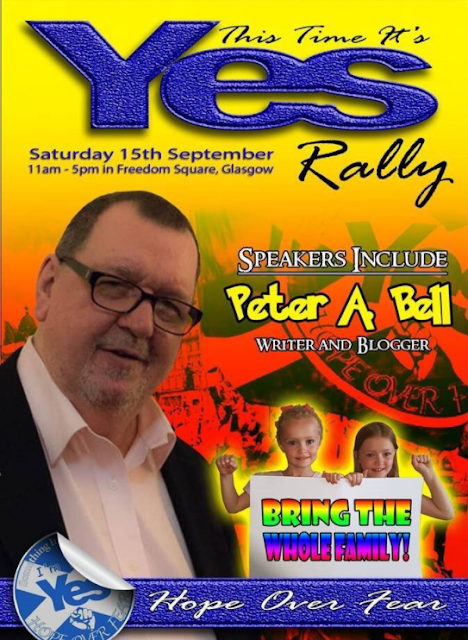
Peter A Bell is justly recognised as a national treasure - and a firm favourite with the kids, as you can see from the classic poster above.  It's always a very special treat when he sends me a novel-length diatribe and then "warns" me that he will be publishing it on Facebook or on his blog as a "precaution" just in case I "censor" him.  That's the type of fearsome threat that makes empires shudder.  Let's face it: the union is as good as dissolved.

I don't know if anyone else has this problem with Peter, but I find his prose very difficult to read.  That's not a problem I've ever had in the disputes with Jeggit or Stuart Campbell, both of whom are very readable even when they're saying things that don't really stack up.  But with Peter, it's often so hard to work out what he's actually angry about, or why anyone should care that he's angry, that I end up having to take a rest every couple of sentences, which means that I sometimes don't even finish reading his comment or post.  In all honesty, that was something I was conscious of even when I was still on good terms with him a few years ago.

So instead of torturing myself by attempting a line by line response to his latest "constructive contribution to the debate", I'll just make a few general remarks about Peter's current idiosyncratic positioning in opposition to both the SNP and Alba, which drives pretty much all of his furious missives these days.  The problem in a nutshell is this: he imagines himself as somehow equidistant between the SNP and Alba, and thinks he can act as a 'bridge' between members of the two parties, but in reality he's significantly further away from the SNP than Alba are.  Alba's route-map to independence is much more radical than what the SNP propose, but Peter's belief in a unilateral declaration of independence is much more radical still.  And yet he thinks the problem can all be sorted out by Alba accepting that the SNP are the only possible vehicle for achieving independence, and the SNP leadership in turn accepting that Peter has been right all along about UDI - something which is of course light-years away from what they would ever accept.  As with the embarrassing #Referendum2018 episode, he feels sure that the SNP could be just a little push away from seeing the light, whereas they actually look upon him and his views as totally batty, and would be far less likely to listen to him than they would to even Alba politicians.

It's precisely because the SNP are not open to alternative ideas on achieving an independence mandate that Alba was formed - and yes, because of the party's current position in the polls, it's going to take an awful lot of hard work to gain traction and achieve our objectives.  But the solution is to get stuck in and actually do that hard work.  It's not to delude ourselves into believing that there's an easy silver bullet available if Peter A Bell can just have a stern word with Nicola Sturgeon.

*  *  *

Barring something unexpected, this will be the last Scot Goes Pop blogpost of 2021. It's been another epic year for the blog: we've commissioned no fewer than three full-scale opinion polls, and produced fourteen podcasts with well-known guests such as Alex Salmond, Chris McEleny and Yvonne Ridley.  If you'd like more of the same in 2022, donations are still very much welcome at the fundraiser page HERE.  Or, if you prefer, you can donate direct via Paypal.  My Paypal email address is:  jkellysta@yahoo.co.uk

Wednesday, December 29, 2021

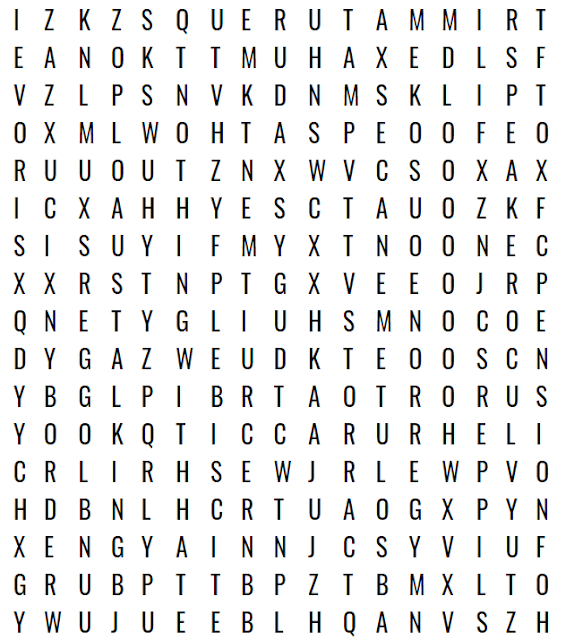
Scot Goes Pop proudly presents a festive Pete Wishart word-search puzzle

It's somehow been forgotten in the mists of time that Scot Goes Pop once had a regular 'Word-Search Wednesday' puzzle feature.  (The Denis MacShane word-search was my all-time favourite, although the Councillor Terry Kelly word-search was a close second.)  As it's the festive period, and as it's ACTUALLY WEDNESDAY, I thought I'd revive the tradition for one night only with a word-search in fond tribute to all things Pete Wishart.


And here are the words you're looking for (the ones in bold only)...

"They have some sort of obsession with carrots.  I simply can't understand it."

"If I wasn't gagging for independence so I can get away from this ghastly job at Westminster at maximum speed, people might start imagining something utterly ludicrous like me wearing slippers."

"My Westminster pension is the last thing I'm thinking about, believe me."

"Bloggers!  Urgh!  Yuck!"

"Having said that, and please rest assured there's no contradiction here at all, I'm a rather accomplished blogger myself and I write the blog that everyone's talking about!"

"Alba! Tut! Harrumph! Absolute menaces!"

"And this particular absolute menace is just soooooooo immature for taking a selfie of himself with TWO carrots."

"These absolute menaces will learn one day that you win nothing with hate.  You know, hateful behaviour like taking a selfie of yourself with TWO carrots."

"You can't win independence with a plebiscite.  In other news, I also believe the only route to independence is a referendum, which may or may not be an alternative word for a plebiscite."

"Mr Speaker sir, oh how I wish I was addressing myself with those words."

"Order!  Order!  AW-DAAAAAAH!"

"As a tireless worker for the cause of independence, what could be more natural than for me to be promoting a recruitment drive for careers at Westminster?"

"Your claim that I am an incredibly sensitive chairman of this committee - HOW DARE YOU CALL ME INEPT - is erroneous."

"Hold!  Hold!  Hold!  Hold!  Hold!  Hold!  Hold!  Hooold!  HOOOOOOOOLD!!!!!!!"

Astonishingly, Toni Giugliano doesn't understand how the STV voting system works

Toni Giugliano, the SNP's unsuccessful constituency candidate in Dumbarton, posted three rather unwise tweets about the Alba party yesterday - including one in which he unwittingly gave the game away about his own lack of knowledge about Scotland's electoral systems.

"Imagine running a council election campaign against one of the most marginalised groups in society. WTF is wrong with these people?"

"Aren’t these the same people who pontificate about Indy being their top priority? Well here’s a wee problem for Abla (sic). This is an STV election. Every vote taken away from the SNP lets pro-union parties in. No gains in this elections and it’s all over."

"What might seem insignificant or “fringe” today could easily become mainstream tomorrow. Always challenge injustice. Never ignore."

Of course I have to start by briefly challenging Toni's appalling cynicism in lying - and it is, without question, an intentional lie - that Alba's campaign against legally-recognised gender self-ID somehow constitutes a campaign against trans people.  Alba fully respects the rights of trans people - and that includes, incidentally, their right to identify as they wish in their day-to-day lives.  It's the way that the legal enforcement of gender self-identification could infringe the rights of others, especially of women and girls, that Alba are quite rightly concerned about. It also has to be said that if Toni really believes that people who wish to self-ID are "one of the most marginalised groups in society", he ought to be questioning why the apparatus of the state is so full-bloodedly behind them (as indeed are four of Scotland's six largest political parties).  Other marginalised communities don't enjoy anything like that kind of protection or support - consider, for example, Scotland's small and vulnerable Russian community, who regularly have to endure dreadful Russophobic comments from senior politicians such as Stewart McDonald.  I haven't noticed Fiona Robertson rushing to get round the table with representatives of the Russian community to draw up a working definition of Russophobia that could be used to discipline McDonald if he refuses to reflect on his conduct.

But Toni's quite right about one thing - the fact that Alba are being dismissed as "fringe" today doesn't mean that the party won't be mainstream tomorrow.

This is primarily a blogpost about Toni's quite astonishing ignorance of the STV voting system used for the local council elections, though.  We've seen similarly ill-informed tweets from Peter Grant MP a few months ago.  Both men have clearly suggested that there is somehow a danger of Alba splitting the pro-independence vote in an STV election in a way that there wasn't in the Scottish Parliament election a few months ago, which was conducted by AMS (the Additional Member System). In fact, the polar opposite is true.  Anyone who voted Alba on the Holyrood list ballot in May was voting against the SNP.  You could only vote for one party on the list, and whichever party you chose, you were rejecting all of the others and harming their chances of winning list seats.  There may have been a strategy behind it, you may have thought with some justification that SNP list votes were highly likely to be wasted, but neverthless there were undoubtedly scenarios in which voting Alba could theoretically have reduced the number of SNP seats.

There is no such scenario in local elections under STV, because STV is a preferential voting system, which means you don't have to reject the SNP to vote Alba.  If the Alba candidate is eliminated, your vote will simply transfer to your second preference candidate, and if that person is an SNP candidate, your vote will have exactly the same effect as it would have done if you'd given your first preference vote to the SNP.  That's not in any way a figure of speech, it's quite literally true.  Votes are not 'diluted' when they're transferred from a first preference candidate to a second preference candidate.

So a few obvious questions for Toni Giugliano and Peter Grant.  Why don't you understand all of this?  Don't you think senior politicians should educate themselves about a voting system before pontificating on it? And once you do understand the significance of STV being a preferential voting system, will you be urging SNP voters to give their lower preferences to other pro-indy parties, including Alba? If not, do you understand that you will be needlessly reducing the number of pro-indy councillors across Scotland, and increasing the number of unionist councillors? Doesn't that suggest that whatever your agenda is, it's not one that prioritises independence?

Incidentally, just in case anyone wrongly assumes that I've changed my own tune on STV elections since joining Alba, here is the video I made for the 2017 local elections with Phantom Power, in which I explain in detail how the system works, and make precisely the same point that I've made above - that SNP voters should give their lower preferences to other pro-indy parties and candidates (which back then mostly meant the Greens).